
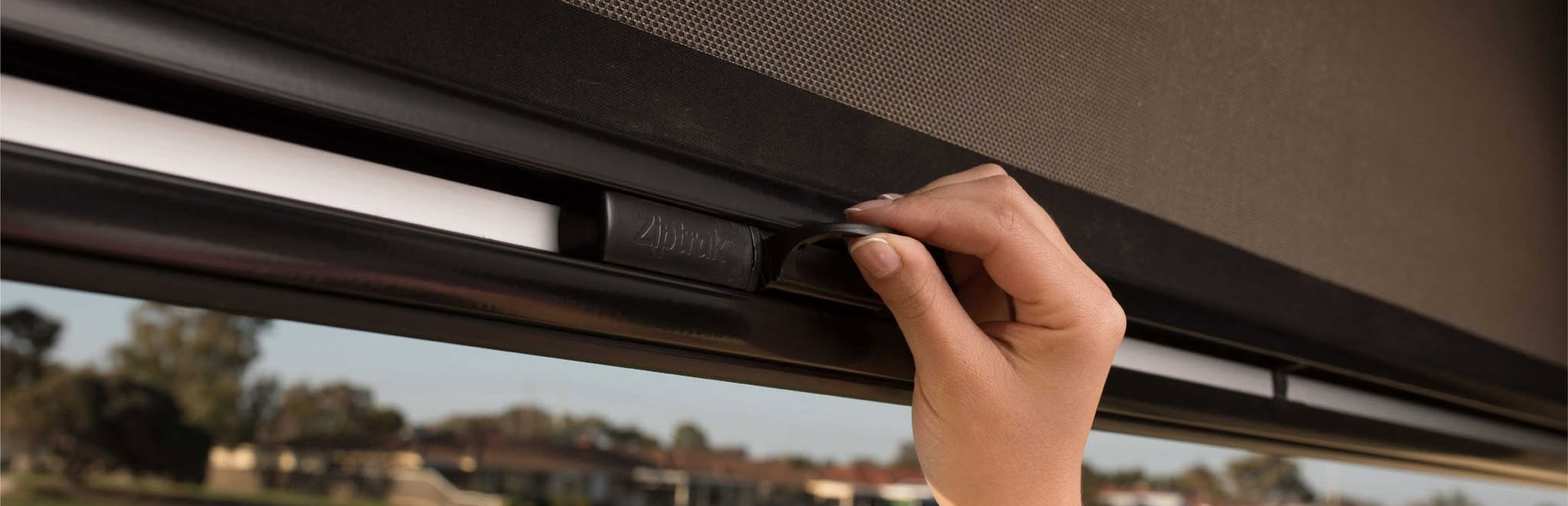
%20(30).png)
In Singapore, homeowners have to face a combination of challenges in balcony use. These include intense tropical heat, sudden rain from monsoons, solar glare, and even urban privacy issues.
Not all outdoor blinds perform the same way against those challenges. In many cases, their performance is actually dependent on the blind fabric used for the specific installation.
Different blind fabrics have variances in light filtration, weather resistance, visibility, and even noise-reduction performance. As such, homeowners need to consider and prioritise their key concerns when selecting fabrics for their blinds.
Ziptrak® in particular has developed a wide range of high-performance options to address homeowners’ needs.
The specific material chosen for your outdoor blinds determines how effective they are at protecting your balcony, which has a direct impact on how comfortable and usable your space feels throughout the day.
This is true even when using the same blind system with different fabrics. Simply changing the fabric can produce very different outcomes in many ways.
One fabric may result in a much brighter balcony than the other, for example. Another may offer more ventilation or noticeable airflow. Yet another may be more weather-resistant and thus more protective during a storm.
Selecting the correct blind fabric is therefore a critical design choice. It can shape whether or not your blinds create the comfort you were aiming for with their installation.
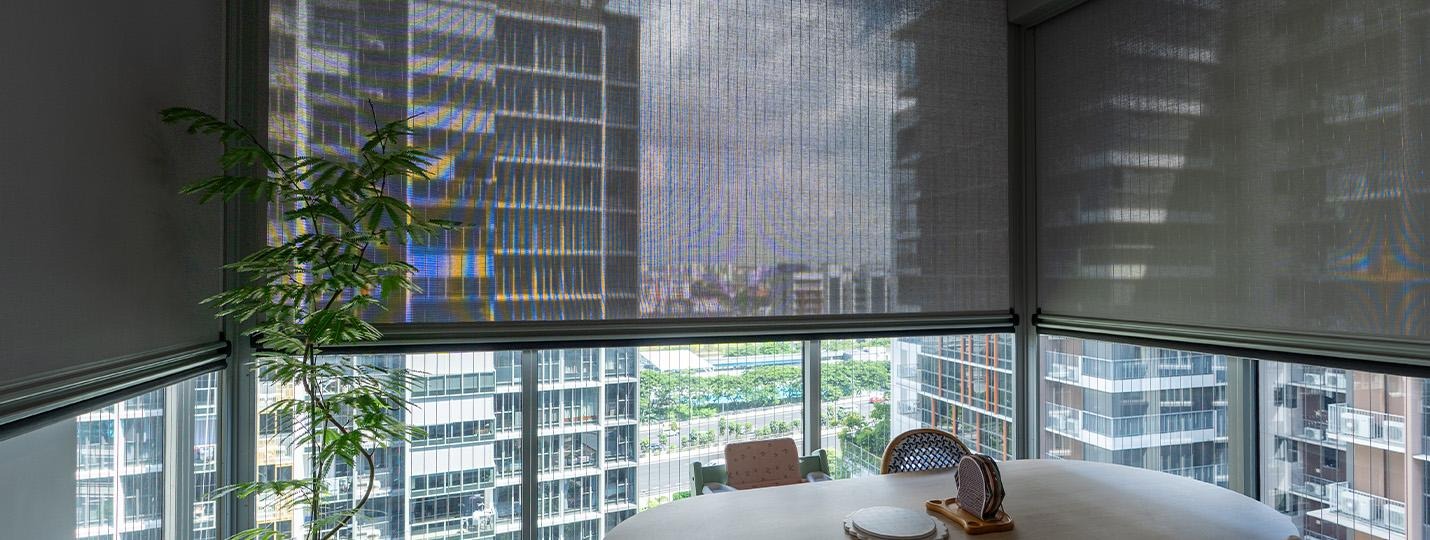
Balconies facing the afternoon west sun typically need fabrics engineered specifically to reduce glare and solar heat gain.
High-quality fabrics may also offer ultraviolet protection that can minimise colour fading for furniture and wooden floors while improving thermal comfort.
For highly exposed building facades vulnerable to heavy downpours, choose a material with enhanced water resistance.
The correct fabric paired with systems like Ziptrak®’s track-guided blinds can keep a significant amount of rain out of a balcony space, safeguarding furnishings or decking.
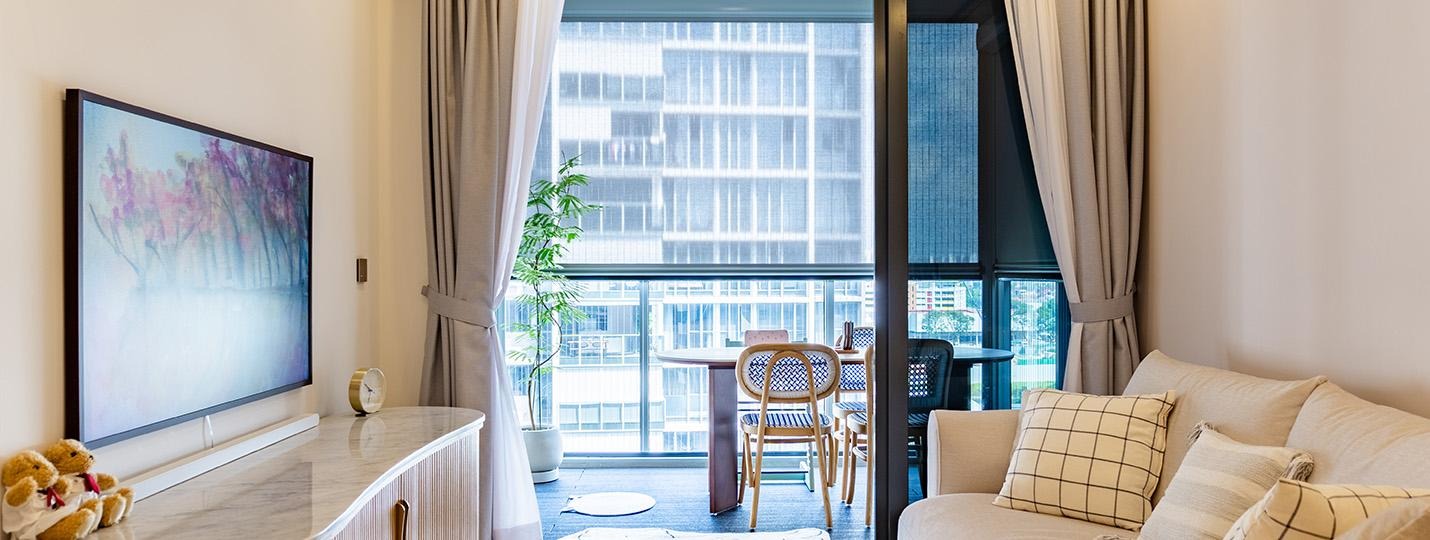
Balconies for homes in high-density urban settings may need added privacy, especially if neighbouring apartments are very close or the balcony faces common walkways.
Some blind fabrics are densely woven to prioritise privacy, while other weaves may be designed to prioritise outward visibility.
Some homeowners may also be concerned about noise entering their homes through exposed balconies, especially if they live near busy roads, MRT tracks, schools, or construction sites.
In such cases, fabric selection can play a role in a broader noise-reduction strategy. Certain specialised acoustic fabrics are designed to help reduce ambient outdoor noise before it reaches indoor living spaces.
Homeowners may also need to decide how much they value an uninterrupted view of their surroundings.
Some specialised fabrics allow for a filtered or diffused view that can help maintain outward views, even when the blinds are down.
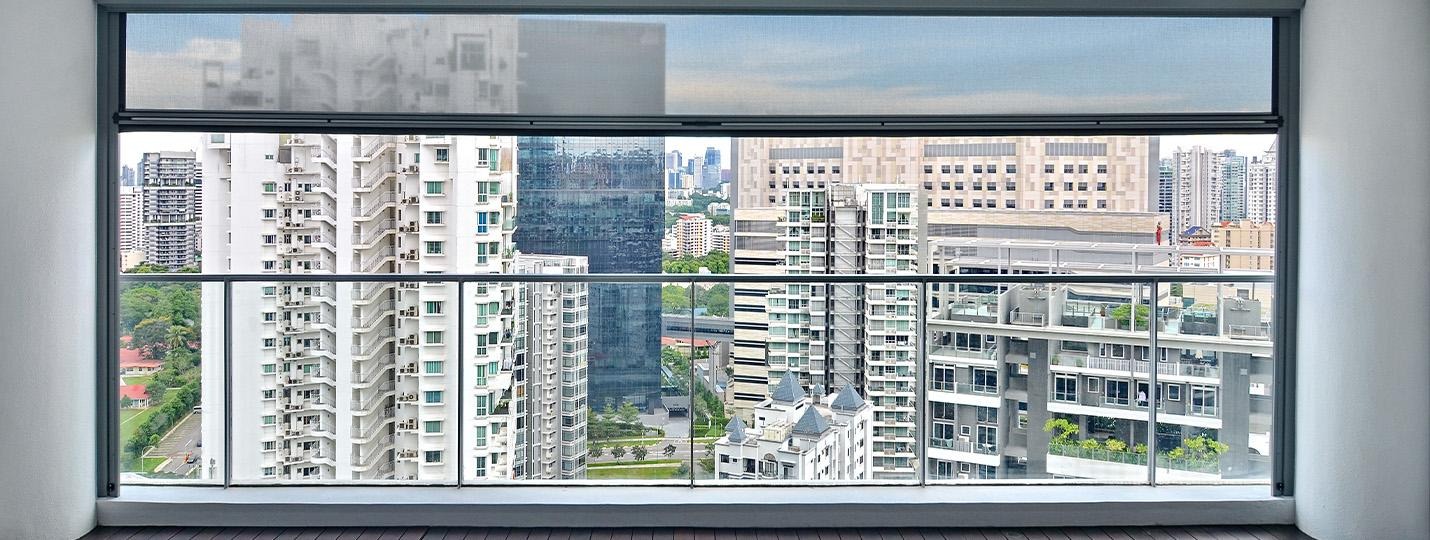
Some mesh fabrics for blinds are designed to be breathable, allowing for natural ventilation and airflow in non-air-conditioned balcony areas via micro-perforations in the weave.
This can help prevent your balcony from becoming too humid or feeling “stuffy” while the blinds are drawn.
Homeowners’ preferences for how the balcony will be used should be considered as they choose their fabrics, as the area may require a different balance of light, privacy, and protection depending on its intended use.
A balcony designated as a home office may require more glare reduction and the ability to keep cooled air in, for example, whereas one meant to serve as a garden space would benefit from more natural light and airflow.
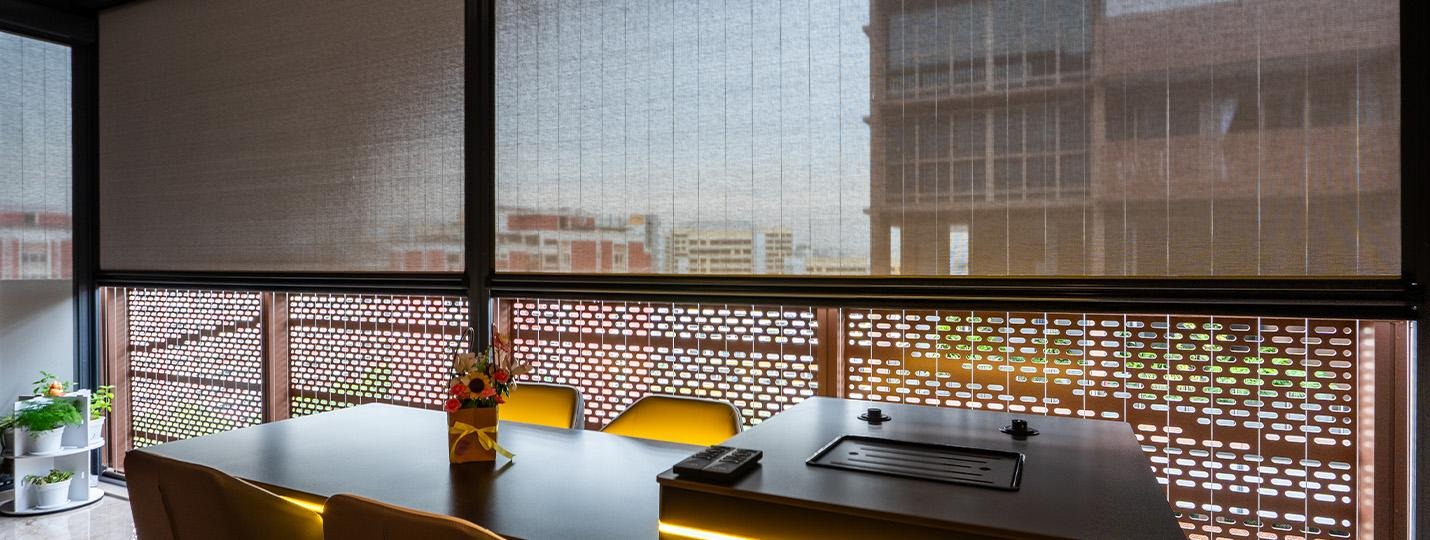
Today, the PolyWeave 1% fabric is the most popular outdoor blind fabric among Singapore homeowners. This may be due to its overall balance of durability and shade.
This robust material was designed with a 1% openness factor, which describes the percentage of open space in the fabric’s weave pattern.
That openness factor allows filtered ambient light and air to pass through the mesh. At the same time, it offers a high level of daytime privacy for the balcony’s occupants.
The same tightly constructed weave provides strong protection against the elements. It can also block a significant amount of ultraviolet rays, protecting the balcony’s occupants from sun damage.
This balanced set of properties explains the popularity of the fabric, as it offers highly versatile use for those who want a safe, flexible, and dependable option.
The FiberWeave 1% is a new premium fabric option from Ziptrak®. It matches the standard 1% openness factor (and thus, ventilation potential) of PolyWeave 1%, but delivers a different visual outcome.
This is due to its material composition and finer yarns construction, which are designed for superior outward visibility to allow inhabitants a higher resolution view of the outside.
It is also more resistant to elongation over time compared to PolyWeave 1%, which may be suitable for those who want a fabric that is resistant to sagging despite constant sun and wind exposure over the years.
That being said, FiberWeave 1% also offers slightly less privacy than PolyWeave, especially when interior lighting is on at night. This makes it best-suited for high-floor units that have scenic views and that are not directly facing neighbouring buildings.
For homeowners concerned primarily with ambient noise intrusion, Ziptrak® also offers the RainOut® Acoustic fabric.
Designed to help reduce ambient outdoor noise, this specialised fabric has been tested by TÜV SÜD and demonstrated an ambience reduction of approximately 11.9 dB (STC 12). This can contribute to a calmer environment, particularly for homes where ambient outdoor noise is a concern.
Beyond its acoustic benefits, RainOut® Acoustic also functions as a high-performance outdoor blind fabric. It helps keep rain out while still allowing natural light to pass through, enhancing the overall privacy and comfort of the space.
This makes it a suitable option for homeowners who want to address noise concerns without compromising on weather protection or the everyday usability of their balcony.
Ultimately, you should select your balcony fabric based on your specific needs and circumstances. Consider whether your main concern is privacy, weather protection, clearer views, or noise reduction before selecting the option that best fits your needs.
If you wish to learn more about your options for outer blind fabrics today, enquire with us at ClimaShield or book an appointment for a live demonstration at our showroom!


