
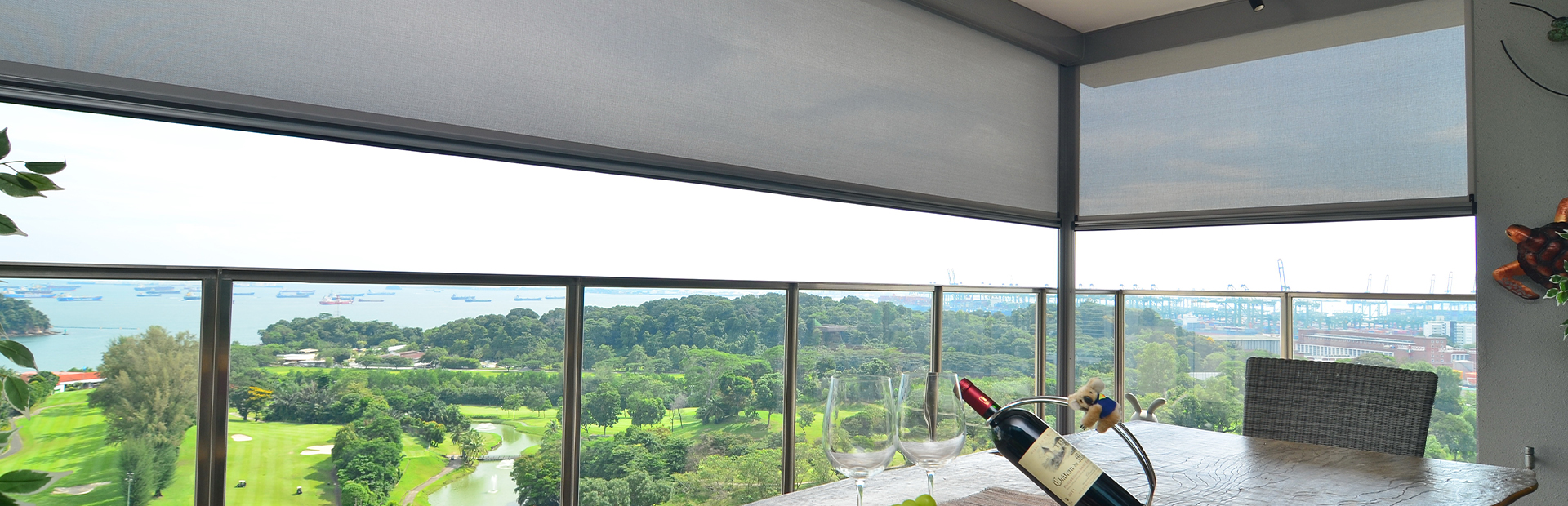
High-rise living is common among Singapore homeowners, as is having a balcony. This semi-outdoor space is a valuable one as it offers chances to create another working or living area. Yet the challenges of high-rise living can run counter to that.
Many homeowners know the frustration well: sudden gusts sweeping through the area, blinds flapping noisily, wind-driven rain soaking the floor, and so on. These make it difficult to use the balcony comfortably, whether for a quiet coffee or a video call.
In search of a fix, people may look up “monsoon blinds for balcony” or simply search for quality blinds with weather protection. However, not every outdoor blind system is designed to handle the wind exposure that can come with a high-rise balcony.
The answer is to understand why balconies are so exposed to wind and what kind of system genuinely holds up. This can save homeowners time and frustration seeking a solution.
Balconies in high-rise developments are typically semi-open spaces, bordered by railings or partial walls rather than full glazing. This design supports ventilation, but also means strong winds can move through with little resistance.
Wind exposure generally increases with building height, although actual conditions can vary depending on the surrounding buildings, building design and local airflow. Open railings and gaps at higher floors can also allow wind and wind-driven rain to enter the balcony more directly.
This exposure tends to create a few recurring issues:
Sudden showers are common in Singapore and can contribute to these issues to make a semi-outdoor space like a balcony harder to use.
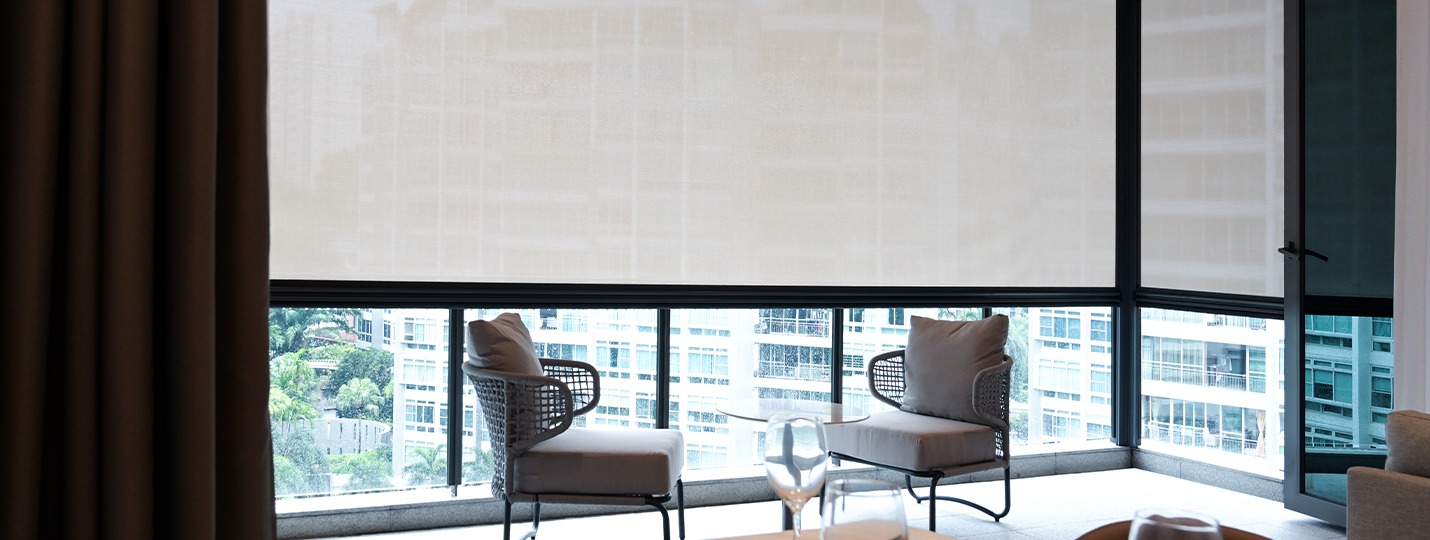
Not all blinds are designed with outdoor or high-rise conditions in mind. Many standard options like regular roller blinds are built primarily for sheltered indoor use.
A common experience with blinds that lack a guided track is that the fabric flaps and shifts excessively once winds pick up, since nothing anchors the sides in place. Gaps then form along the edges, letting wind and rain pass straight through.
This is an important limitation – without a system that guides and retains the fabric at the sides, the blind can be more susceptible to movement and gaps in strong wind conditions, reducing its ability to provide consistent protection from the elements. The result is reduced durability, persistent noise, and a balcony with limited utility.

Ziptrak® Outdoor Blinds use a patented side spline, a reinforced edge strip that keeps the fabric locked within a fixed track running down either side. The design draws on rigging principles used on sailboats, where a similarly engineered spline keeps sails in place even under strong wind conditions.
Ziptrak® Outdoor Blinds have been tested to withstand static wind loads of up to 260 km/h in local tests conducted with TÜV SÜD PSB in Singapore.
Because the fabric is held firmly within the tracks on both sides, the system provides a tighter seal than many conventional outdoor roller blinds, helping to limit wind and rain from entering through the sides, while reducing the movement and noise associated with flapping fabric.
For homeowners setting up something like a home office on the balcony, this steadiness is of great importance. A blind that stays flat and quiet instead of snapping in the wind makes it possible to focus on work in the space, instead of retreating each time the weather turns.
The overall effect is a more sheltered and comfortable semi-outdoor environment that can be used consistently, instead of only on fine weather days.

The frame and track system is only half the equation. Fabric choice also plays a part in how well a balcony withstands the elements.
Homeowners looking to pair Ziptrak® Outdoor Blinds with a weatherproof fabric may want to consider:
With the right track-guided blind system and fabric pairing, a high-rise balcony can shift from an unpredictable corner, into one that homeowners can actually enjoy every day. That includes using it for everything from an extension of the living area to a new home office, regardless of the weather.
Homeowners considering Ziptrak® Outdoor Blinds can explore the range through ClimaShield, an authorised Ziptrak® retailer in Singapore. Book a showroom visit to view fabric samples and explore the unique track system in person.


