

%20(27).png)
Managing noise is one of homeowners' most common concerns in Singapore, because many homes here are exposed to multiple sources of external noise.
City living often means close proximity to main roads, highways, MRT tracks, or bus interchanges. Even busy schools and playgrounds can contribute to surrounding noise levels.
For apartment units or properties with balconies, this noise often enters the home through the semi-outdoor space before reaching interior windows. This is why homeowners sometimes look into outdoor acoustic blinds as a way to reduce noise while keeping the space usable.
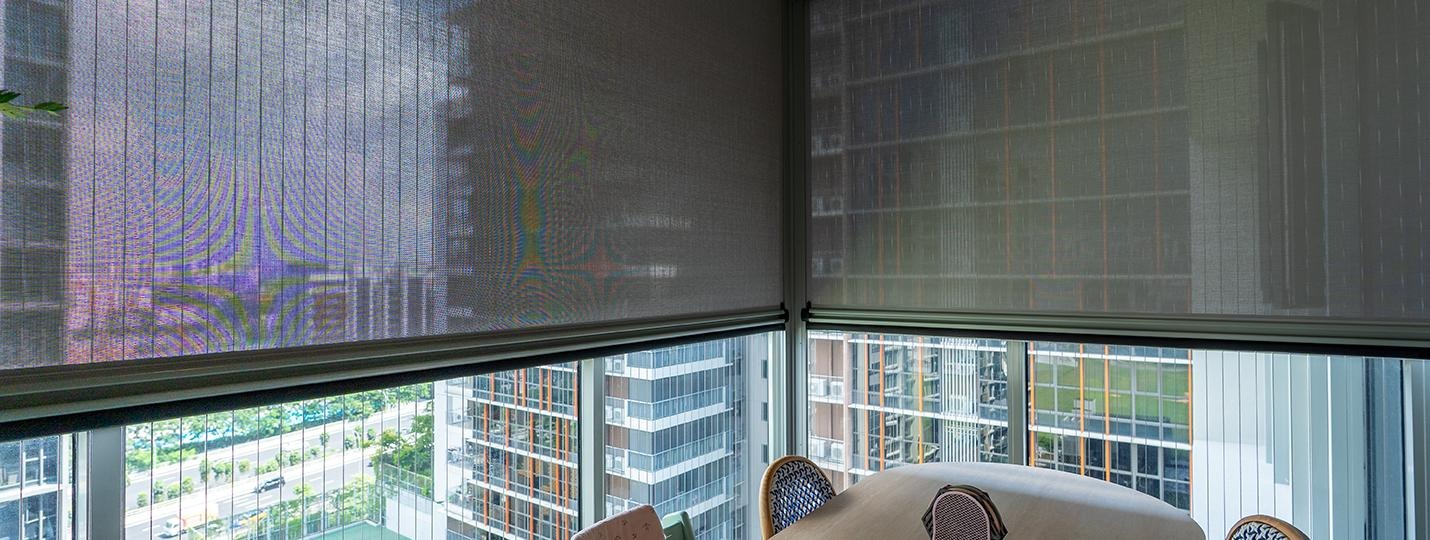
Acoustic blinds are fabric blinds made from thicker or specially engineered materials that are designed to help reduce the amount of sound entering a space.
These blinds are typically installed externally, along balcony openings or railings. This can help them reduce noise before it reaches interior windows or balcony sliding doors.
Specifically, outdoor acoustic blinds can help to:
It’s important to note that acoustic blinds in Singapore are designed to reduce noise intensity as a first layer of noise buffering, not to fully soundproof a home.
This means that they don’t generally achieve full “sound blocking”, so some sound may still enter the home. Many traditional roller blinds that claim to be acoustic are also not sealed at the sides, which allows external sound to enter through the gaps.
Ziptrak® can perform better in this respect because the fabric is held within a sealed track system. The patented side spline helps minimise gaps along the sides of the blinds, reducing pathways through which sound can enter.
This allows Ziptrak® blinds to potentially reduce noise more effectively than standard roller blinds that are not sealed along the sides. The RainOut® Acoustic fabric is particularly effective at this, having been tested to reduce noise by 11.9 dB, which is perceived as a noticeable decrease in loudness to the human ear.

Soundproof windows are among the most effective solutions for reducing the entry of noise into a home. Unfortunately, they involve heavy renovation, high costs, and possibly even management approval.
By comparison, acoustic blinds are more affordable, require minimal installation work, and offer modest noise buffering for semi-outdoor areas without structural changes to your home.
This is why many homeowners consider installing acoustic blinds first and only consider upgrading to soundproof windows if noise issues persist after that.
Window seals close small gaps around existing windows, which can reduce wind whistling and minor noise leakage.
However, this mainly addresses noise that enters through small gaps, e.g. via the balcony sliding doors at the entrance to the interior space. Acoustic outdoor blinds help buffer noise earlier, at the balcony itself. This means the sound is reduced even before it reaches possible gaps in the windows.
Acoustic panels or fixed screens can help reflect or absorb sound, especially when installed along balcony edges or side walls.
However, these can sometimes limit airflow and may make the space feel enclosed or visually heavy. Such panels may also need to be replaced regularly due to deterioration from exposure to the elements.
Acoustic outdoor blinds offer a more flexible alternative. Because they’re not fixed, homeowners can adjust coverage as needed. They can get ventilation, light, or an open view by rolling the blinds up when needed. Then they can roll them down at noisy times of the day.
Another option homeowners may try for sound reduction is outdoor carpets or acoustic ceiling panels. These are mainly used to reduce echos and improve sound comfort within a space.
These are best viewed as secondary enhancements rather than primary noise-reduction measures, however. They cannot prevent sound from entering the home in the first place.
Acoustic outdoor blinds address noise at the actual point of entry. This is typically more effective for reducing traffic noise, wind, or ambient outdoor sounds.
Glass panels create a physical enclosure that helps reflect and reduce external noise before it reaches your interior windows. Because they form a solid barrier, they may offer stronger noise reduction than fabric-based solutions while still maintaining clear views and natural light.
Some glass enclosure systems, such as Glass Curtains®, have shown sound reductions of up to around 25dB in certain testing conditions.
For homeowners seeking stronger noise control, it’s also possible to combine Glass Curtains® with acoustic blinds, creating multiple layers that help reduce overall noise levels in the balcony space.

Ziptrak® blinds with acoustic fabrics can create a noise-reduction layer between outdoor noise and interior windows. With their sealed track system, they can reduce traffic sounds, construction noise, loud voices, and ambient street sounds.
They work by creating an additional barrier that helps reduce the amount of sound travelling into living spaces. With fabric options like the new RainOut® Acoustic FiberWeave 1%, homeowners can even reduce noise by about 11.9 dB.
RainOut® Acoustic uses a waterproof outdoor fabric that’s designed to keep rain out and enhance privacy while allowing natural light to pass through. This yields multiple benefits for homeowners, who can transform their balconies into usable living areas year-round.
When considering options for reducing ambient noise in your home, it’s important to remember that acoustic blinds should not be viewed as full interior soundproofing solutions.
Instead, they are best considered as part of a layered approach to noise reduction, working alongside other solutions such as improved window seals or glass balcony enclosures.
If you’d like to learn more about acoustic blinds or see how these systems work in person, reach out to us or book a showroom visit at ClimaShield. Our team can help you explore practical solutions for quieter, more comfortable living.


